


Advertising across multiple platforms is a must for marketers and advertisers. With the rise of streaming, there has been a big shift from traditional cable TV to streaming services. The two big players in this space are OTT and Connected TV advertising. Many people use these terms interchangeably but they aren’t the same thing. To create a multichannel advertising strategy you need to know what makes each type of advertising different. You’re in the right place!
What is Connected TV advertising?
Definition of CTV Advertising
Connected TV advertising is the delivery of video ads to viewers through internet-connected television devices.
These devices include smart TVs, streaming devices, and gaming consoles. Unlike traditional TV advertising which broadcasts to a broad audience, CTV advertising allows brands to target specific demographics with high quality, engaging video ads.
This form of advertising uses the largest screen in the house to capture viewer attention and drive engagement.
Examples of CTV Devices
Examples of CTV devices include:
Smart TVs: Popular models from manufacturers like Samsung, LG, and Sony offer built-in internet connectivity, allowing users to stream content directly.
Streaming devices: Devices such as Roku, Amazon Fire TV Stick, and Google Chromecast connect to traditional TVs, enabling them to stream content from various platforms.
Gaming consoles: Consoles like PlayStation and Xbox not only offer gaming experiences but also support streaming services, making them versatile CTV devices.
Set-top Boxes: Provided by cable companies, these boxes often come with internet connectivity features, allowing users to access streaming content alongside traditional TV channels.
What is Over-the-Top (OTT) advertising?
Over-the-top (OTT) advertising is the delivery of video ads through internet connected devices, bypassing traditional broadcast and cable television.
This type of advertising can be delivered across multiple screens, including smartphones, tablets, desktops, laptops, and CTV devices.
OTT advertising allows brands to reach their target audience with personalised, engaging ads, leveraging the flexibility of streaming services. Unlike linear TV which follows a set schedule, OTT platforms offer on-demand content, making it easier for advertisers to reach viewers at the right time.
Examples of OTT platforms include Amazon Prime Video, Apple TV, HBO Max, and Netflix.
Now that you know the definitions and examples of CTV and OTT advertising, marketers can strategise their campaigns to effectively reach and engage their target audience across multiple devices and platforms.
OTT and CTV Advertising: a comparative analysis
By understanding the distinctions and strengths of each platform, advertisers can make more informed decisions about where and how to allocate their advertising efforts for maximum impact.
Targeting your audience
OTT Advertising: OTT platforms collect a lot of data about individual viewer behaviour, preferences and interests. This includes viewing history, search queries, and interaction with different types of content.
Using this data, OTT allows advertisers to create highly personalised ads. For example, a viewer who watches cooking shows frequently may see ads for kitchenware or grocery delivery services.
CTV Advertising: Connected TV ads are targeted at the household level, using data on household demographics and collective viewing patterns.
This is more like linear TV advertising but with a digital twist. CTV isn’t as granular as OTT but still offers contextual and behavioural targeting.
Advertisers can place ads on content that aligns with their target audience’s interests or at specific times when their audience is most likely to be watching.
A well-optimised Connected TV ad can reach a targeted audience and drive engagement and conversion.
Ad formats and viewer experience
OTT Advertising: OTT platforms support a wide range of ad formats. This includes standard video ads, interactive ads that viewers can engage with, sponsored content that connects to regular programming and display or banner ads that appear while viewing content.
OTT ads often integrate seamlessly into the viewing experience. For example, native advertising can be incorporated into content in a natural and non-intrusive way.
CTV Advertising: Connected TV uses traditional TV ad formats but uses digital targeting to increase the relevance of these ads to households or audience segments.
Most CTV ads are non-skippable, so viewers have to watch the whole ad. Ads are full screen, which is more immersive on larger TV screens.
Measurement and analytics
OTT Advertising: OTT platforms provide detailed data on viewer behaviour, including what, when and how long they watch content. This level of detail covers ad interactions, so you can see how viewers are engaging with specific ads.
Metrics often focus on the relevance and effectiveness of these personalised ads.
The key metrics are engagement rates, click-through rates, and conversion rates.
CTV Advertising: Connected TV ads often focus on household-level data, so you see the viewing habits and preferences of a broader audience. This may include data on what type of content is watched and prime time viewing.
CTV analytics shows the ad’s reach (how many households it was shown to) and frequency (how often it was shown). These metrics are similar to traditional ads but with more precision.
Audience reach and engagement
OTT Advertising: OTT platforms can reach beyond geographical boundaries to offer content that appeals to a global audience.
This includes niche markets that are often underserved by traditional media, so you can target specific interest groups or demographics with highly tailored content.
With the rise of streaming TV, there has been a big shift from traditional cable TV to streaming services, changing how people consume content and how advertisers reach their audience.
OTT platforms are popular among younger demographics who prefer streaming services to traditional TV. This means you can reach millennials and Gen Z who are harder to reach through traditional media.
CTV Advertising: CTV combines the wide reach of traditional TV with the added benefits of internet connectivity. It’s ideal for reaching a wide range of demographics in one household, so good for family oriented brands and products.
The larger format of CTVs increases viewer engagement especially with visual content and ads. This can lead to more brand awareness and influence.
User interaction
OTT Advertising: OTT platforms often enable more direct user interaction with ads. This may include clickable ads, where viewers may click on the ad to obtain more information, make a purchase or be redirected to a website.
Given the personalised nature of OTT viewing, users can interact with ads in a more personalised way.
For example, they can choose which ad to watch or skip ads that are less interesting to them. Some OTT ads take the form of interactive content such as mini-games or quizzes.
These formats can significantly increase engagement and make your ads more memorable.
CTV Advertising: Interaction with CTV ads tends to be more passive, like traditional TV advertising. Viewers watch these ads mainly without the opportunity to interact directly, such as clicking or selecting.
Most Connected TV ads are unskippable, ensuring that the ad is viewed in its entirety. This can lead to better brand awareness as viewers are more likely to watch the entire ad without distraction.
Some CTV platforms are starting to experiment with interactive features, such as on-screen QR codes that viewers can scan with their mobile devices to increase engagement with ad content.
Challenges and considerations in OTT and CTV Advertising
While OTT and CTV advertising is exciting, they also come with their own set of challenges and considerations. Addressing these is crucial for advertisers to get the most out of their campaigns.
Content overload
The sheer amount of content on OTT and CTV platforms can be overwhelming for audiences who have too many choices. This can make it harder for your ads to stand out and get noticed.
High costs of producing high-quality content
Creating high quality ad content, especially for CTV, can be expensive. The challenge is balancing effective advertising with budget constraints.
Ad Fatigue
As people are exposed to more digital ads, they may experience ad fatigue and as a result become desensitised to advertising messages. To combat this you need to create fresh, innovative and engaging content.
Personalisation and privacy
While personalised ads may be more effective, concerns about privacy and data use are growing. Advertisers need to approach these carefully to maintain viewer trust when serving targeted content.
Why OTT and CTV advertising shouldn’t be neglected
OTT and CTV advertising are the essential components of a modern advertising strategy. Traditional TV viewing is rapidly being displaced by streaming services and online content platforms. To stay relevant and reach audiences where they are most active, advertisers need to adapt to these changing habits.
In the U.S., 88% of households owned at least one internet-connected TV device in 2023, and the number of CTV users among Gen Z and Millennials exceeded 110 million.
When it comes to OTT, OTT video advertising was projected to reach a market volume of $205.10 billion USD in 2023, making it the largest segment of the industry.
These numbers show the rise of OTT and CTV advertising. These platforms are a vital part of any advertising strategy and able to reach younger, tech-phobic audiences.
The big investment and measurable results of OTT and CTV advertising proves they work to engage audiences, influence consumer behaviour and drive market trends.
For advertisers and brands the conclusion is clear: OTT and CTV must be part of their advertising mix to stay relevant and reach a broad and growing audience in the digital age. Ignoring these platforms means missing out on a big chunk of the consumer market.
The final thoughts
To sum up OTT and CTV advertising, it’s clear these are a must-have for marketers. OTT platforms with their ability to serve highly targeted ads based on detailed viewer data is a new frontier in targeting.
They allow advertisers to create campaigns that deeply resonate with viewers’ individual preferences and interests.
CTV extends this digital strategy into the living room, combining the broad appeal of traditional TV with the precision of digital targeting. This is a powerful tool for advertisers to reach a broad range of household demographics.
Looking forward OTT and CTV will play a big part in how brands connect with audiences. Advertisers who use these platforms, understand their unique strengths and challenges will succeed.
The key will be to create engaging, relevant and effective ads that resonate with the modern viewer who is looking for entertainment and information on streaming services.
If you find this article valuable, you can share it on social media →
Read more about the VOD & OTT Industry!

Media technology integration: turning stacks into systems
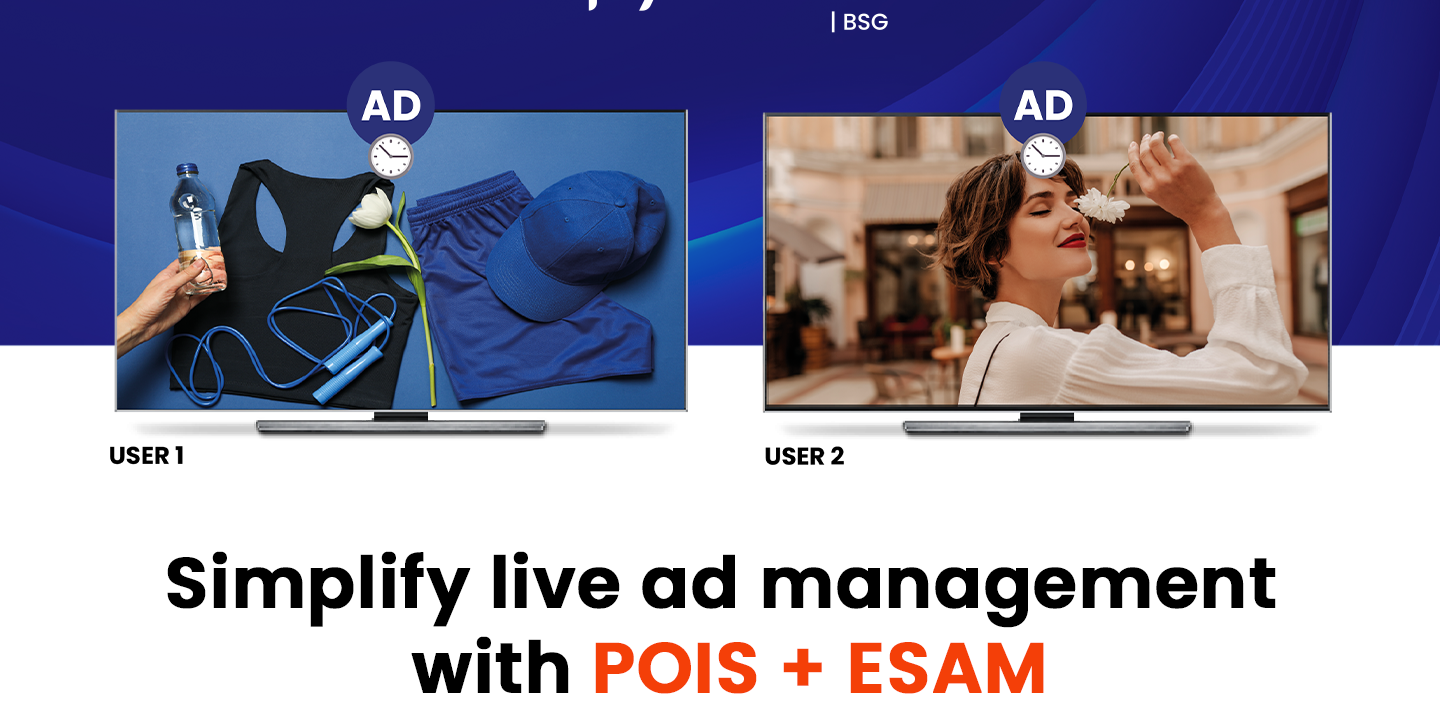
Learn how POIS and ESAM move ad control to the source, giving broadcasters real-time flexibility and regional targeting.
How POIS and ESAM power live ad control
Learn how POIS and ESAM move ad control to the source, giving broadcasters real-time flexibility and regional targeting.

What is Amazon Vega OS and why it matters for Fire TV users
Amazon unveils Vega OS, a new Linux-based system replacing Android on Fire TV. Faster, lighter, and built for independence from Google’s ecosystem.
Are you looking for a partner to build a Video Solution?
Leave your email and a short description about your project. We would gladly discuss different cooperation possibilities!