
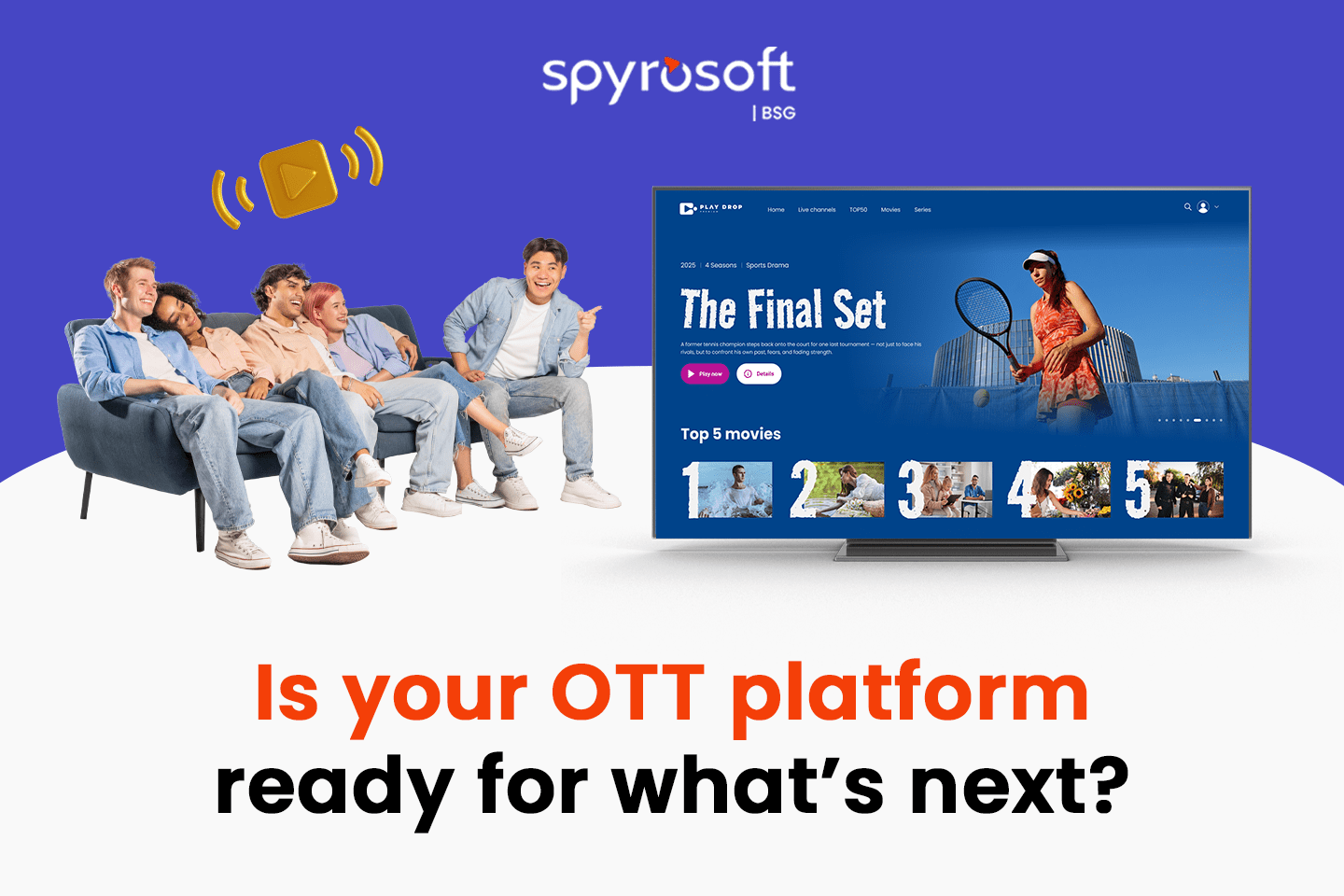
Let’s face it – streaming is moving faster than ever. New platforms pop up, technologies shift, user expectations climb and monetisation models keep evolving. One minute your OTT platform is cutting-edge, the next it’s playing catch-up.
So how do you make sure your platform won’t fall behind in the next 6 months or even 6 weeks? You can’t predict the future, but you can build for it. And it starts with asking the right questions.
Here are five that every media company, streaming provider and content owner should be asking right now.
1. Can your platform grow without falling apart?
Picture this: your original series goes viral. You get featured on a national morning show. Suddenly, tens of thousands of new users flood in. Is your infrastructure ready? Or do you brace for impact?
A future-proof OTT platform should be able to:
- Handle unpredictable traffic spikes without slowdowns or crashes
- Add new content, features or even an entirely new service tier without requiring a rebuild
- Scale across regions, languages, and time zones – not just in your home market
Future-readiness goes beyond adding more servers. It requires smart, sustainable architecture built for long-term performance and agility:
- Cloud-native deployments that scale automatically to match demand
- Microservices architecture that isolates issues and prevents system-wide failures
- Smart CDN strategy with edge caching and built-in redundancy for faster, more reliable delivery
- Global-ready infrastructure that ensures low-latency content delivery to users anywhere in the world
Pro tip: Stress-test your system under simulated spikes. Can it serve 5x the current audience without compromising user experience? If not, now is the time to prepare – not when you’re trending.
2. Is it built for all the screens – even the ones that don’t exist yet?
A truly future-proof OTT platform is about being ready for tomorrow’s innovations. As new screens and technologies emerge, from next-gen smart TVs to gaming consoles and beyond, your platform needs the flexibility to deliver high quality streaming everywhere your audience wants to watch.
Your users expect content to be available across Smart TVs, including Tizen, webOS and Android TV, as well as on streaming sticks like Roku, Fire TV and Apple TV. They also want access on mobile phones, tablets, gaming consoles, wearables and even unconventional devices such as smart fridges or car infotainment systems. And they expect a consistent, seamless experience across all of them.
That includes:
- A responsive, intuitive UI tailored to each device type
- Cross-platform watchlists, resume points and user profiles
- Minimal effort to push updates or bug fixes across platforms
- The ability to support new devices with minimal rework
In other words: multi-platform is mandatory, and cross-platform parity is non-negotiable. You need to support multiple platforms such as iOS, Android, Roku, Apple TV, Amazon Fire TV and Smart TVs to reach your audience everywhere.
The best platforms use a unified codebase or a component-based design system to keep the experience consistent while tailoring interactions to each form factor. If you’re developing and maintaining six completely separate apps, you’re already behind.
3. Can you switch or combine monetisation models easily?
Monetisation was once straightforward: pick between subscriptions or ads, build your platform around that choice and you were set. Today, the landscape looks very different.
Audiences are more fragmented than ever. Some viewers are happy to watch content for free as long as it comes with ads. Others are willing to pay for an ad-free experience. Some prefer to purchase individual titles on demand, while others expect bundled offers, seasonal promotions, or access to exclusive live pay-per-view events.
To stay competitive, your platform needs to support:
- SVOD (subscription-based)
- AVOD (ad-supported video on demand)
- FAST (Free Ad-Supported TV – linear-like streaming)
- TVOD (transactional video on demand – pay-per-view, rentals)
- Hybrid models (e.g., a low-cost plan with ads, plus premium tiers)
- New models: shoppable video, NFT-gated access, sponsorships, interactive ads
The catch? You need the flexibility to adapt fast.
A modern OTT platform should offer:
- Built-in payment and entitlement systems that support tiering and bundles
- Ad tech integrations (SSAI, VAST/VPAID support, DAI)
- Support for multiple currencies, languages and tax regimes
- Real-time A/B testing tools to experiment with monetisation models
Ask yourself: Can you launch a new monetisation feature in 2–4 weeks? Or will it take 3 months and a dedicated dev team? That answer tells you how future-ready you really are.
4. Are you actually using your data or just collecting it?
Every platform collects data. But few actually use it well. You probably have dashboards tracking:
- Content views and drop-offs
- Conversion rates from freemium to paid
- Device usage and app sessions
- Marketing attribution
But future-proofing means going deeper. A modern OTT platform should turn raw data into actionable insight – and let AI help power key features, such as:
- Personalised recommendations based on real-time behaviour
- Churn prediction, with early warning signals and automated interventions
- Dynamic pricing and promotions tailored to specific users or segments
- Content performance forecasting, so you know what to invest in next
Data should never be an afterthought or something isolated within a BI team. It needs to be embedded in product decision-making, editorial strategy, ad targeting and UI/UX optimisation at every stage. And if you’re still relying on monthly manual exports or waiting days for reports to generate? It’s time for an upgrade.
5. How easy is it to change, improve, or add new things?
Innovation moves fast and your platform needs to keep up. To remain competitive, your team should be able to:
- Add new capabilities quickly, such as integrating a new payment provider within a single sprint
- Test and iterate efficiently, for example by validating a new UX flow with real users without spending weeks in QA
- Launch updates with confidence, whether it’s a new content category, app feature, or recommendation engine, all with minimal disruption
If these sound like challenges, your current tech stack might be the reason. Teams often struggle to move fast when the underlying platform is:
- Monolithic and tightly coupled
- Poorly documented, making onboarding and updates difficult
- Not API-driven, limiting integration possibilities
- Lacking in automation, CI/CD, and testing pipelines
A future-ready OTT platform should be modular, allowing development teams to work independently and deploy updates without impacting other areas. It should be API-first, making it easy to integrate new services, tools, or partners as business needs evolve. Being DevOps-ready is also essential, with reliable deployment processes, automated testing and mechanisms for quick rollbacks. Above all, it must be built for change because viewer expectations never stand still.
Consider this challenge: Could your team design, develop and launch a brand-new interactive content format in under 30 days? If not, it’s worth asking what’s standing in the way and whether your current architecture is truly built for what’s next.
Final thoughts: future-proofing is an ongoing process
The truth is, no platform is ever truly finished and no tech stack can claim to be permanently future-proof. But there’s a significant difference between being prepared for what’s coming and being constantly caught off guard by change.
A future-ready OTT platform doesn’t require you to chase every emerging trend. Instead, it’s about making thoughtful, forward-looking decisions today that prepare your business to adapt tomorrow. That means investing in scalability from the outset, so your platform can grow without hitting architectural limits. It means designing with flexibility in mind, allowing for faster iterations and smoother integration of new technologies. It involves building for every screen, ensuring seamless experiences across mobile, web, Smart TVs and beyond.
It also means empowering agility through modular architecture, where changes can be made without disrupting the entire system. And it’s about turning real-time data into actionable decisions, helping you stay aligned with user behaviour and market shifts.
Want support in building a truly future-proof OTT platform?
That’s exactly where we come in.
Whether you’re looking for a white-label OTT solution or a fully custom-built application, we provide end-to-end services – from cloud infrastructure and monetisation strategy to real-time streaming and app development.
Let’s connect and explore what your future-ready platform could look like!
If you find this article valuable, you can share it on social media →
Read more about the VOD & OTT Industry!
Media technology integration: turning stacks into systems
Learn how POIS and ESAM move ad control to the source, giving broadcasters real-time flexibility and regional targeting.
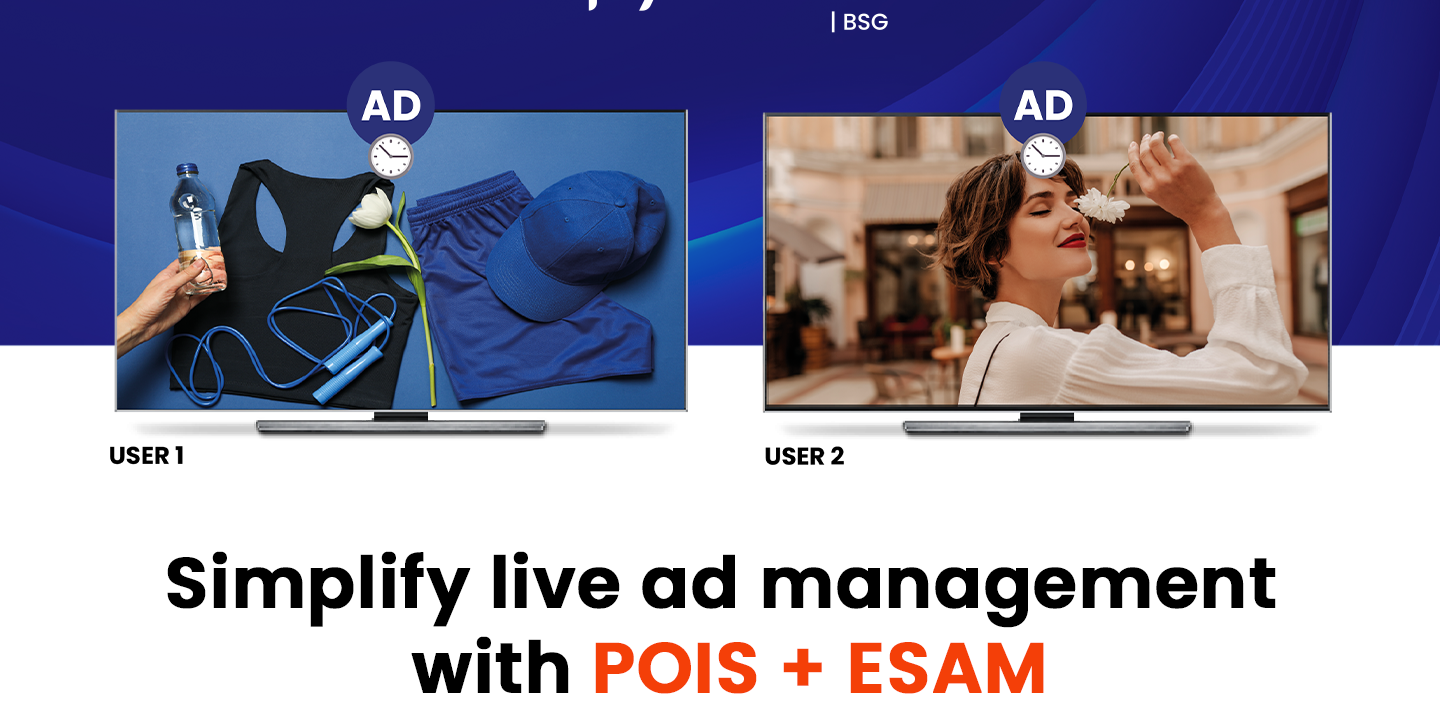
How POIS and ESAM power live ad control
Learn how POIS and ESAM move ad control to the source, giving broadcasters real-time flexibility and regional targeting.
What is Amazon Vega OS and why it matters for Fire TV users
Amazon unveils Vega OS, a new Linux-based system replacing Android on Fire TV. Faster, lighter, and built for independence from Google’s ecosystem.
Are you looking for a partner to build a Video Solution?
Leave your email and a short description about your project. We would gladly discuss different cooperation possibilities!