

The media and entertainment industry has never had more technology at its fingertips. Everywhere you look, there are platforms and products promising better streaming quality, smarter monetisation, tighter security, or more personalised recommendations. The offer is overwhelming, and, in theory, it should mean that building a successful digital platform is easier than ever.
Yet many organisations still struggle. Broadcasters face broken ad workflows. Sports leagues hit scalability issues when fan numbers peak. Retailers experiment with video commerce, only to see poor engagement. Even with advanced tools in place, the results often don’t match expectations.
This raises an important question: do we really need more products, or do we need a better way of using the ones we already have?
The overcrowded streaming and media tech landscape
The market is crowded with acronyms and platforms:
- Online Video Platforms (OVPs) for hosting and distribution.
- Ad tech solutions for programmatic advertising and dynamic ad insertion.
- Monetisation models such as AVOD, SVOD, TVOD, or hybrids of them all.
- Media Asset Management (MAM) and Digital Asset Management (DAM) systems for organising massive libraries.
- Security tools like DRM, encryption and watermarking.
- AI-powered engines for analytics, personalisation and audience insights.
Individually, each of these has value. Together, they often create complexity. Organisations end up with too many dashboards, fragmented data and overlapping features. Instead of an integrated ecosystem, the result can feel like a collection of disconnected parts.
Key insight: Technology is not the missing ingredient. The real issue is bringing all of it together in a way that aligns with business goals.
Every company is becoming a media company
The boundaries of media are no longer limited to traditional broadcasters or publishers.
- Retailers are producing live shopping streams and interactive product videos.
- Automotive brands are embedding entertainment platforms directly into vehicles.
- Healthcare providers are distributing video-on-demand for patient education.
- Sports leagues are launching direct-to-consumer OTT platforms to reach fans worldwide.
Despite operating in different sectors, their challenges are strikingly similar:
- Delivering content at scale across devices and geographies.
- Protecting valuable rights without creating barriers for viewers.
- Monetising content effectively, whether through subscriptions, advertising, or pay-per-view.
- Maintaining viewer engagement in an environment of endless choice.
Products help with specific functions, but they rarely solve the complexity of building an end-to-end streaming or OTT platform. That’s why so many organisations face siloed workflows, wasted investment and underwhelming user experiences.
Why services matter more than more products
Adding another tool to the stack does not guarantee success. The real gap lies in expertise – knowing how to make the technology work together.
Examples are easy to find:
- An ad tech system that fails to integrate with content management workflows.
- A recommendation engine deployed without access to behavioural data, producing irrelevant suggestions.
- A robust DRM solution that never achieves its potential because it isn’t configured correctly.
In all cases, the technology itself is capable. The challenge lies in implementation.
What services deliver
- Discovery – Choosing solutions that are cost-effective and aligned with actual business needs.
- Integration – Making different products operate as one coherent platform.
- Operations – Maintaining and optimising performance over time.
- Adaptation – Adjusting platforms to new monetisation strategies, regulatory demands, or audience behaviours.
Products create potential. Services transform that potential into measurable outcomes.
A different way of thinking: how Spyrosoft BSG approaches media & entertainment
Many vendors in the media and entertainment space focus on selling products. Their pitch often revolves around features: faster, smarter, more automated. That approach has its value, but it doesn’t always help when the real obstacle is complexity, not capability.
Our approach starts earlier in the process. Before suggesting a tool, we ask questions such as:
- What are the business goals?
- Where do the biggest bottlenecks appear today?
- Which parts of the existing ecosystem are working well and which are slowing you down?
Instead of assuming that a single platform can solve everything, we map out the ecosystem and design solutions around the client’s unique pain points.
Sometimes that means integrating existing tools rather than replacing them. Sometimes it means building new features on top of what’s already there. And sometimes, it means helping clients scale their teams so they can maintain and evolve the platform themselves.
Where many companies see a split between “products” and “services,” we see them as complementary. Products provide functionality. Services ensure that functionality fits the business context and delivers measurable results.
Another difference lies in how we view success. A project doesn’t end when the code is delivered, or the platform goes live. Real success is when a client’s internal team feels confident running the solution, adapting it and scaling it further without unnecessary dependence on external support.
The Build-Operate-Transfer (BOT) model
A proven approach is the Build-Operate-Transfer (BOT) model:
- Build – Establishing a dedicated team, setting up infrastructure and aligning processes with business objectives.
- Operate – Running the team collaboratively, ensuring transparency, efficiency, and quality while scaling where needed.
- Transfer – Transitioning the mature team and knowledge into the client’s organisation, leaving full ownership in place.
This hybrid model combines the flexibility of outsourcing with the long-term stability of in-house capability.
Solving real problems: the CANAL+ case
A good example of this approach is our recent project with CANAL+ Poland, one of the country’s leading premium broadcasters. Like many media companies, they faced a challenge that products alone couldn’t solve. Traditional ad insertion workflows were rigid, based on predefined schedules and didn’t offer the flexibility needed for live broadcasting. This made it difficult to respond to in-signal events, customise ads regionally, or open new revenue streams.
Working closely with the CANAL+ team, we designed and delivered real-time, signal-based ad replacement system. Instead of relying on static ad breaks, our solution enabled CANAL+ to manage SCTE-35 markers directly within the signal stream. That gave them the ability to insert, replace, or remove ads with far greater precision.
The benefits became clear almost immediately:
- More control over live events – ads could be triggered dynamically, for example right after a goal in a football match.
- Regional customisation – satellite and OTT audiences could see different ads depending on their location, all from a single main feed.
- New monetisation models – multiple advertisers could share premium slots during live events, creating fresh revenue opportunities.
We didn’t just deliver the technology and leave. Our team took full ownership of maintenance, feature development, and infrastructure support, ensuring the system stayed stable and ready for future business needs.
The last words
The media and entertainment industry doesn’t lack tools. It lacks ways to make them work together. From streaming platforms and DRM systems to ad tech and recommendation engines, the technology is already out there. What organisations need is the expertise to turn those separate parts into solutions that truly deliver: scalable, cost-effective and sustainable.
That’s why the focus has to shift from products alone to the partnership between products and services. Technology provides the building blocks, but services unlock their real value.
Are you facing similar challenges in streaming, monetisation, or integrations? Let’s talk about how we can help turn your tech stack into a business-ready solution!
If you find this article valuable, you can share it on social media →
Read more about the VOD & OTT Industry!
Media technology integration: turning stacks into systems
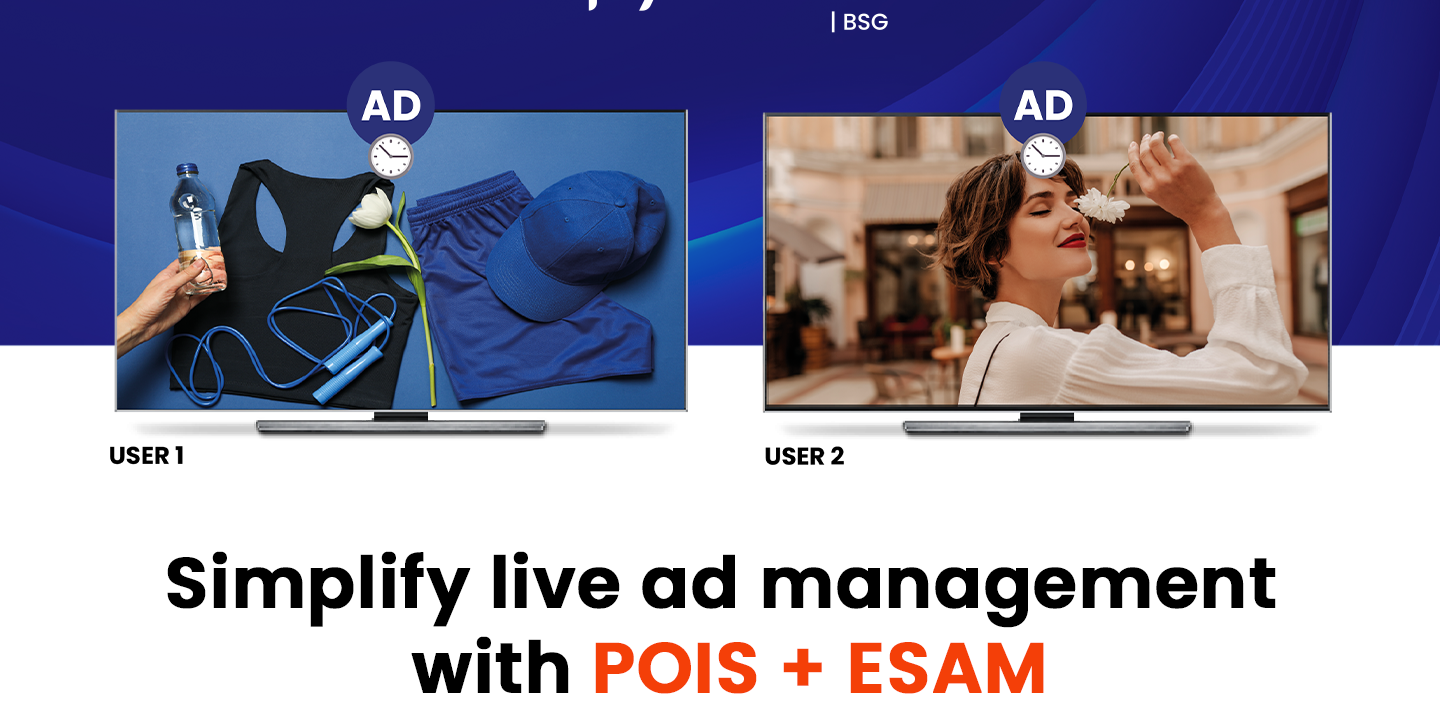
Learn how POIS and ESAM move ad control to the source, giving broadcasters real-time flexibility and regional targeting.
How POIS and ESAM power live ad control
Learn how POIS and ESAM move ad control to the source, giving broadcasters real-time flexibility and regional targeting.
What is Amazon Vega OS and why it matters for Fire TV users
Amazon unveils Vega OS, a new Linux-based system replacing Android on Fire TV. Faster, lighter, and built for independence from Google’s ecosystem.
Are you looking for a partner to build a Video Solution?
Leave your email and a short description about your project. We would gladly discuss different cooperation possibilities!